

These costs fluctuate with production volume, meaning that when more units are produced, total variable costs increase, and when production decreases, they decrease as well. Common examples of variable costs include raw materials, labor costs directly tied to production, and utility costs that vary with output. Variable costs are expenses that change in direct proportion to the level of production or sales volume. Unlike fixed costs, which remain constant regardless of the level of production, variable costs increase as production increases and decrease when production declines.
- In addition, focusing too heavily on marginal cost might lead managers to overlook important fixed costs or long-term strategic considerations.
- In marketing, there is a pricing technique which is called contribution cost pricing.
- The distinction between variable costs (primarily labor) and constant capital (machinery, buildings) is critical to understanding the dynamics of exploitation and capital accumulation.
- Moreover, the particular government is in charge of infrastructure.
- A business’s marginal costs are only used for internal reporting and managerial decisions.
- As such, a company’s fixed costs don’t vary with the volume of production and are indirect, meaning they generally don’t apply to the production process—unlike variable costs.
Variable Costs
Indicates the total monetary outlay directly related to production levels, allowing businesses to assess total cost implications. These are the types of variable costs that refer to a percentage of sales generated that are awarded to the sales people as additional compensation. The sales commission is given to the salesperson when he meets his given target, otherwise, there is no commission. Direct labour is also a variable cost, and it varies depending on the number of units produced. As the quantity produced increases, the cost for direct labour also increases. When the bakery does not bake any cake, its variable costs Bookkeeping for Consultants drop to zero.

Theory of the Firm – Egg farmers get squeezed by higher costs
- When marginal cost equals marginal revenue, each additional unit sold contributes the maximum possible amount to the company’s profits.
- As production increases, variable costs are added to fixed costs, and the total cost is the sum of the two.
- The total expenses incurred by any business consist of variable and fixed costs.
- Any business’s overall expenses are made up of both variable and fixed costs.
- Invest in modern machinery and systems that optimize resource usage and minimize errors.
- Marginal cost is the cost incurred when producing one additional unit.
- A fixed cost is a business expense that doesn’t vary even if the level of production or sales changes given a specific relevant range.
Let’s assume that it costs a bakery $15 to make a cake—$5 for raw materials such as sugar, milk, and flour, and $10 for the direct labor involved in making one cake. The table below shows how the variable costs change as the number of cakes baked varies. The sum of all costs incurred in the production process, including both fixed and variable costs. The costs on which the output level does not have a direct impact are known as Fixed Costs. For example, salary of staff, rent on office premises, interest on loans, etc. Other names of fixed costs are Supplementary Cost, Overhead Cost, Unavoidable Cost, Indirect Cost, or General Cost.
Cost Analysis and Control
If you invest £1million in developing a cure for pancreatic cancer, the opportunity cost is that you can’t use that money to invest in developing a cure for skin cancer. It depends on the weather, fuel charges, infrastructure, and conditions. Moreover, the particular government is in charge of infrastructure. Commissions are a percentage of a sale’s proceeds that are awarded retained earnings balance sheet to a salesperson as additional compensation.

The future of variable cost management lies at the intersection of cutting-edge technology and sustainability. Embracing AI-driven solutions, automation, and sustainable practices will empower companies to optimize variable costs while simultaneously reducing environmental impact. By harnessing the potential of these innovations, businesses can pave the way for a more efficient, eco-conscious, and financially resilient future. Variable costs, as the name suggests, are expenses that flex and adapt according to the production level or the number of goods and services delivered. Incurring these costs offers many benefits that directly impact a company’s financial health and competitiveness.
Average Fixed Cost (AFC)
There may be fixed cost components, such as the cost of an in-house email distribution network, but most shipping costs are variable. As the Total Fixed Cost remains the same at all output levels, the change in Total Cost completely depends upon Total Variable Cost. Short-run average cost curves tend to be U shaped because of the law of diminishing returns.
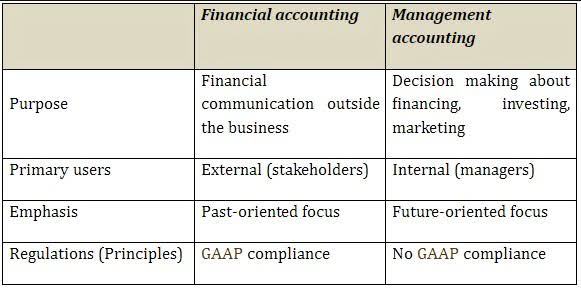
Conversely, if the bakery produces fewer cakes, it will require fewer ingredients, and its variable costs will fall accordingly. For example, if you produce more cars, you have to use more raw materials such as metal. Now that we understand the basics, formula, and how to calculate variable costs equation, let us also explore the practical application through the examples below. Sometimes, there is a sudden fall in the availability of labor—production cannot be stopped—wages hike overnight. There is a linear relationship between variable expenses and production. Fixed costs are often variable cost economics definition seen as unavoidable—employee salaries, electricity, rent, and office expenses.
The intersection of marginal cost and marginal revenue identifies the profit-maximizing level of production (see the chart above). When marginal cost equals marginal revenue, each additional unit sold contributes the maximum possible amount to the company’s profits. Producing beyond this point would mean spending more on production than the revenue generated from sales, while producing less would mean missing out on profits. Another way to understand the average variable cost is via the firm’s cost function, which can be plotted as a curve.
Marginal costs can include variable costs because they are part of the production process and expense. Variable costs change based on the level of production, which means there is also a marginal cost in the total cost of production. While variable costs tend to remain flat, the impact of fixed costs on a company’s bottom line can change based on the number of products it produces. The price of a greater amount of goods can be spread over the same amount of a fixed cost.
